Gradient Descent for Life

Improvement is not only a matter of moving downhill. It is also a matter of choosing which valley is worth descending into.
Markets, monopoly, careers, and the games worth playing.
Improvement is not only a matter of moving downhill. It is also a matter of choosing which valley is worth descending into.
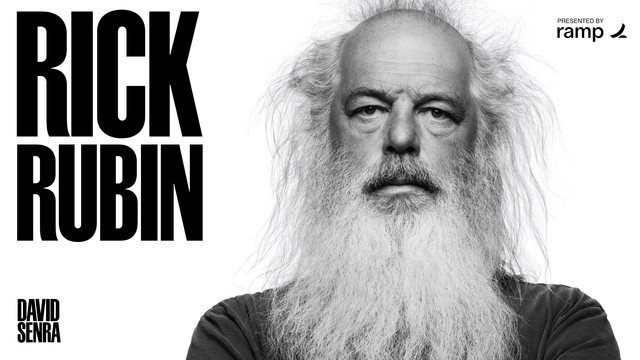
David Senra traces Rick Rubin’s career and the ruthless reduction, deep listening, and creative restraint behind his work.
Winners keep winning. That's the whole point. The lesson isn't to try harder at their game. It's to build a monopoly in one they haven't found yet, while the rules are still being rewritten and the leverage is free.
Founders keep asking how to build faster. That's the wrong question. Speed was the bottleneck for twenty years. It's not anymore.
Specialization was the 20th century's answer to complexity. The 21st century is discovering it was the wrong question.
In 1587, Queen Elizabeth I’s spymaster, Francis Walsingham, achieved one of the great coups in the history of espionage. Using little more than intercepted letters, ciphers, and the occasional tortured confession, Walsingham exposed the Babington Plot, a conspiracy to assassinate Elizabeth and place Mary, Queen of Scots, on the throne. Walsingham's reward? Eternal gratitude from the queen, the continued survival of Protestant England—and, one imagines, the sort of satisfaction that only comes from outwitting murderous aristocrats. His tools were crude, but his mission was clear: decode the enemy before they destroy you.
In the austere marble visions of ancient Rome, a full life was conceived as a mosaic of many parts, each tessera contributing its own brilliance to the greater whole. The ideal citizen of the Republic was expected to begin as a soldier, honing body and spirit on the battlefield. This was no mere martial posturing; it was a rite of passage, a crucible through which courage and discipline were forged. The next phase called for the role of merchant or entrepreneur, extracting profit from the unruly seas of commerce and learning the art of negotiation and resourcefulness. Finally, when wisdom had been chiseled by the hand of experience, the citizen would ascend to politics—a domain for the wrinkled and worldly, where philosophical musings and rhetorical flourishes danced uneasily with power plays and poison-tipped daggers. This triptych of soldier, merchant, and statesman was no accidental sequence; it was a deliberate strategy, a life philosophy that embraced the full spectrum of human potential.