I'm Gavin Hall, a designer and developer interested in calm interfaces, sharp writing, and software that behaves.
I write about UI/UX, software engineering, agentic AI, philosophy, architecture, typography, industrial design, and the technologies reshaping how we build and think.
Founder and creative director of Magnet. Based in Cincinnati with my wife Sarah and our two boys.
Artificial intelligence is leaving the chat box and acquiring memory, voice, identity, money, and bodies. As action becomes cheap, judgment becomes the scarce thing—and the question of what its hands are for remains ours.
Computation is starting to leave the biosphere. Orbital data centers would let part of the Earth's thinking happen off-world—an opening that is neither sacred nor profane, only moral.
We taught sand to think. The miracle is not that matter became strange, but that the human animal learned to see forms hidden inside ordinary things and build the knowledge to reveal them.
Winners keep winning. That's the whole point. The lesson isn't to try harder at their game. It's to build a monopoly in one they haven't found yet, while the rules are still being rewritten and the leverage is free.
Deutsch’s gift is not a set of claims. It’s a lens: progress as the production of good explanations—and the moral demand to keep error-correction alive.
Cousins begin as a fact of childhood. The luckier thing is to keep choosing one another as adults, building a friendship long after family stopped doing the arranging for you.
Most design deliverables are screenshots. The real artifact is the specification: the rules, the edge cases, the failure modes. Pixels lie; specs commit.
The centaur was human judgment augmented by machine power. The reverse centaur is human labor subordinated to machine logic. We are becoming the horse.
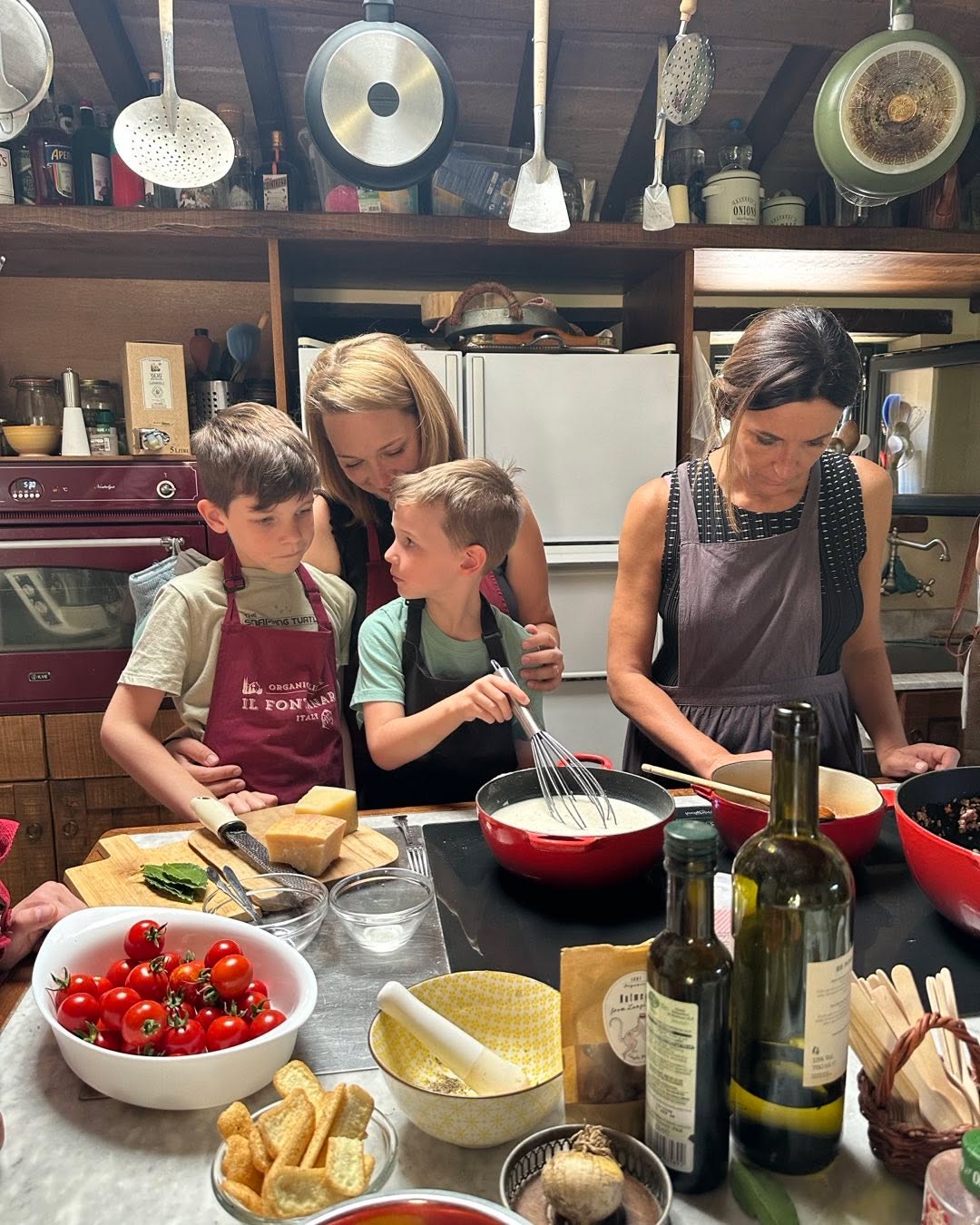
The best family travel does not optimize children out of the experience. It finds a place where everyone wants the same things at the same time. Italy seems to have been built for exactly this.
The calm here is elemental—woven from its geography as much as from its people. There is a profound sense of order in the valleys and along the ridgelines. Nothing is unsightly. Every stone, every roofline seems placed with an unspoken precision.
Horse camp in Kentucky gave our boys more than a week of riding. It gave them an experience large enough to become part of their shared history—one they still return to in conversation.
From Bell Canyon, Sandy spreads out below while the mountains rise behind you. It is a rare arrangement: the conveniences of a real city pressed against the edge of genuine wilderness.
By 2025, search engines and recommendation systems have moved beyond mere tools for retrieving information—they’ve become extensions of human cognition, functioning as externalized brains. Powered by advances in indexing, vector databases, and cross-referencing technologies, these systems reshape how we process knowledge. But as they grow indispensable, we must confront a critical question: Are they enhancing our thinking, or are we outsourcing it entirely?
In 1587, Queen Elizabeth I’s spymaster, Francis Walsingham, achieved one of the great coups in the history of espionage. Using little more than intercepted letters, ciphers, and the occasional tortured confession, Walsingham exposed the Babington Plot, a conspiracy to assassinate Elizabeth and place Mary, Queen of Scots, on the throne. Walsingham's reward? Eternal gratitude from the queen, the continued survival of Protestant England—and, one imagines, the sort of satisfaction that only comes from outwitting murderous aristocrats. His tools were crude, but his mission was clear: decode the enemy before they destroy you.
Amidst a parade of electric vehicles that resemble sullen rectangles and expressionless bars of soap, Rivian's R3 emerges as a pleasant anomaly—proof that design doesn't have to surrender to the soulless tyranny of efficiency. It doesn’t look like it was drawn by an algorithm on a tight deadline, nor does it aspire to double as a Blade Runner prop. Instead, it dares to be approachable, elegant, and, most shockingly of all, human. The R3 suggests that the electric future need not sacrifice warmth and charm at the altar of technological inevitability.
There was a time, not so distant, when the artist’s labor was a rebellion against oblivion—a furious demand to be seen, heard, or understood across the gulfs of time. Caravaggio’s chiaroscuro wrestled with mortality itself; James Joyce redefined the limits of language as though daring humanity to keep up. Today, that struggle has been outsourced to a cold and unfeeling steward: the Algorithm, a faceless arbiter whose only metric is engagement, a deity whose offerings are served with a side of irrelevance.
In the austere marble visions of ancient Rome, a full life was conceived as a mosaic of many parts, each tessera contributing its own brilliance to the greater whole. The ideal citizen of the Republic was expected to begin as a soldier, honing body and spirit on the battlefield. This was no mere martial posturing; it was a rite of passage, a crucible through which courage and discipline were forged. The next phase called for the role of merchant or entrepreneur, extracting profit from the unruly seas of commerce and learning the art of negotiation and resourcefulness. Finally, when wisdom had been chiseled by the hand of experience, the citizen would ascend to politics—a domain for the wrinkled and worldly, where philosophical musings and rhetorical flourishes danced uneasily with power plays and poison-tipped daggers. This triptych of soldier, merchant, and statesman was no accidental sequence; it was a deliberate strategy, a life philosophy that embraced the full spectrum of human potential.
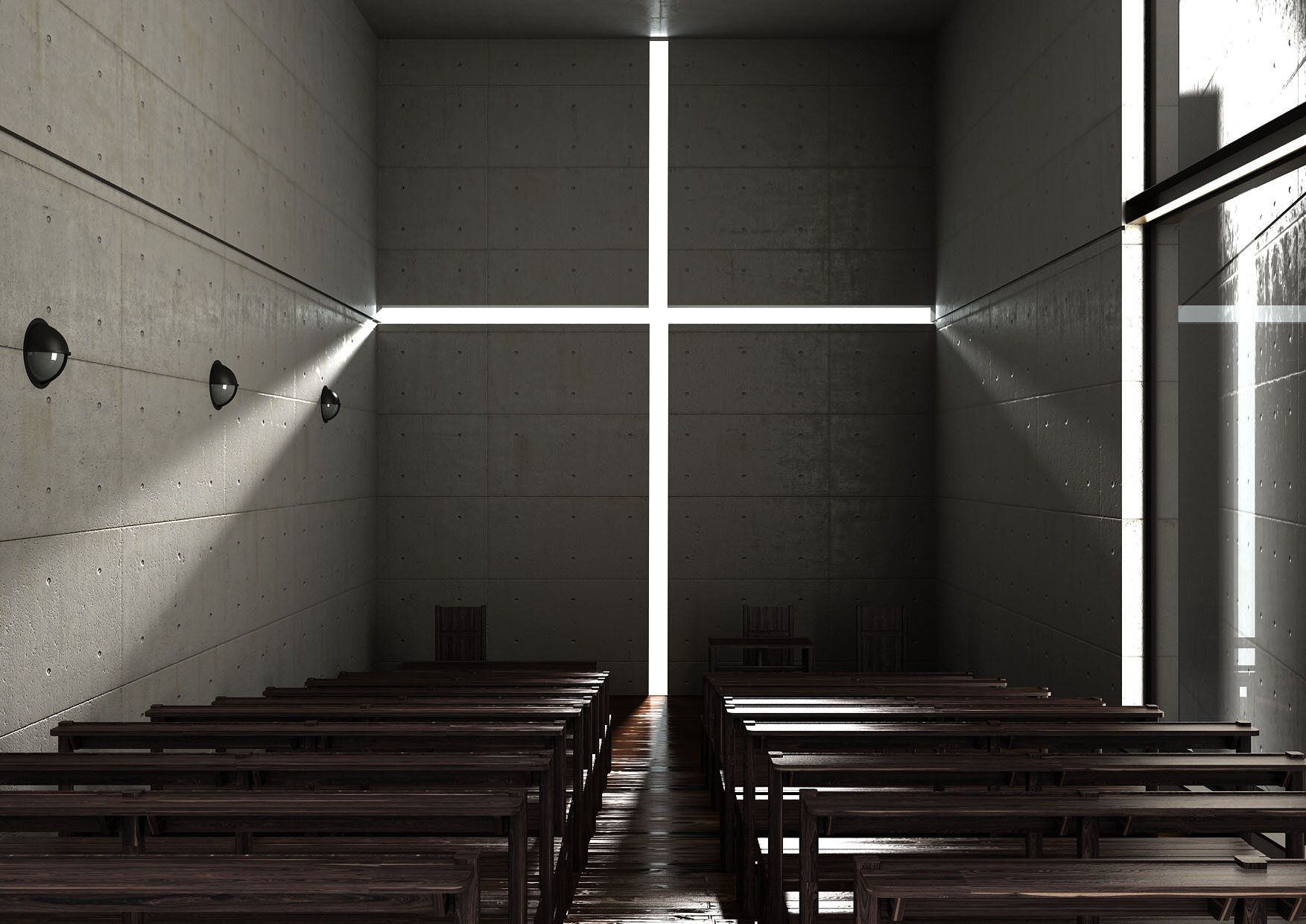
In a world saturated with noise—literal, visual, and ideological—it is increasingly rare to encounter spaces that insist upon silence. Yet this is precisely what the work of Tadao Ando accomplishes: an audacious refusal to capitulate to the clamor of modernity. Ando’s structures, which temper the severity of concrete with the capriciousness of light, are not mere buildings but sanctuaries for the mind and soul. They embody a principle that has been all but forgotten in contemporary architecture: the power of restraint.
To understand Marcel Proust is to accept the absurd and improbable fact that one of the greatest literary achievements in human history emerged not from a life of action, but from one of inaction—a life largely spent in bed. And not just any bed, mind you, but a fortress of hypersensitivity, meticulously arranged to shield its inhabitant from the twin horrors of modernity: noise and drafts.
There’s something delightful about a book that takes a subject as unsexy as “why stuff doesn’t fall over” and manages to make it both fascinating and, dare I say, funny. J.E. Gordon’s Structures: Or Why Things Don’t Fall Down is that rare sort of book—one that sneaks into your brain disguised as entertainment but leaves you a bit smarter, slightly smugger, and much more suspicious of bridges.
On my office shelf, a photograph of my father stands watch—silent, unchanging, and, in a way, unknowable. In it, he carries wood planks over his shoulder, his grin a fragment of unselfconscious joy. Behind him, the ski chalet he restored stands like a monument to competence and optimism. It’s the sort of picture that captures a person not as they were in their totality but as they might wish to be remembered—a distillation, free of the messier truths of illness, fatigue, or the gradual erosion of character that time so often imposes.