Intelligence Is Growing Hands
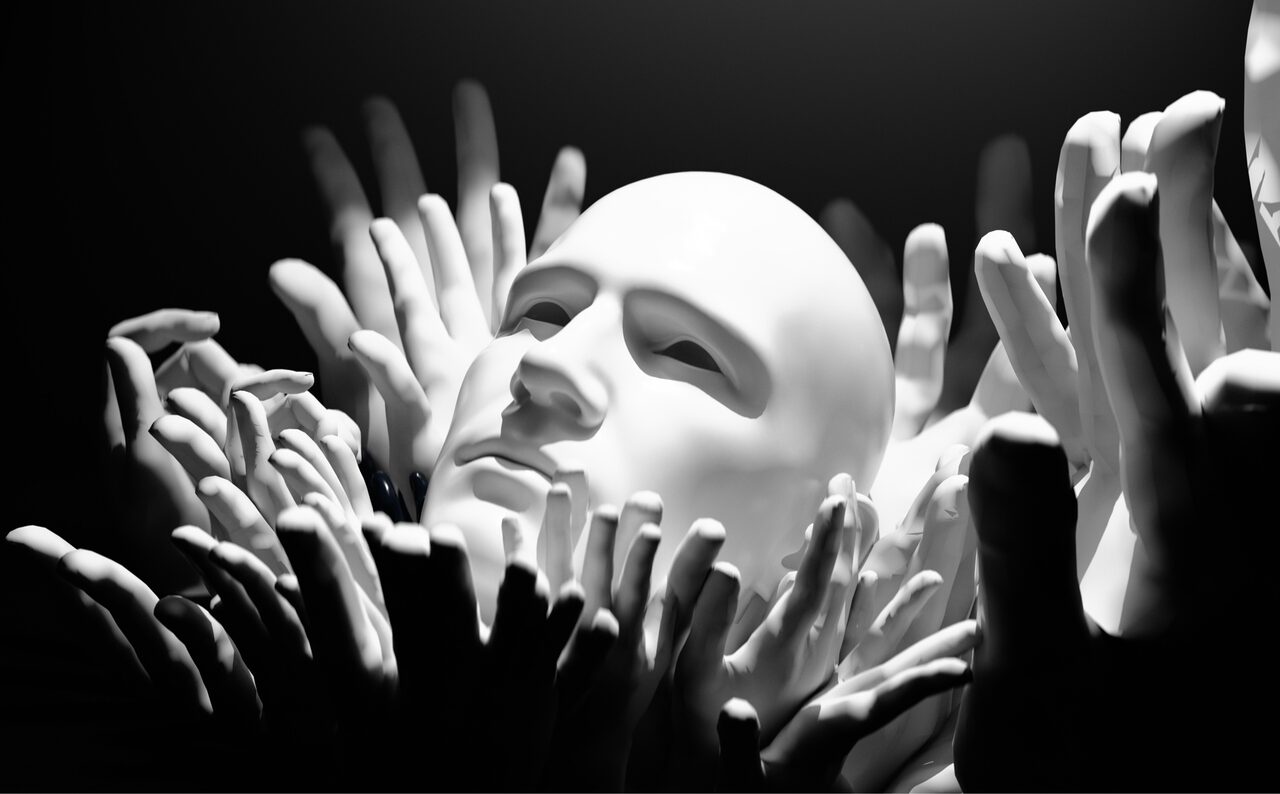
We taught the machine to speak.
Now it is learning to act.
For most of computing history, the distance between thought and consequence remained human. A machine could calculate the path, but a hand still had to turn the wheel. Software could find the record, but a person had to read it, judge it, and decide what came next. The screen was a border. On one side, symbols moved. On the other, the world waited.
That border is dissolving.
Artificial intelligence is leaving the narrow chamber of the chat box and entering the machinery of ordinary life. It is acquiring memory, voice, identity, authority, money, tools, and, at last, bodies.
Intelligence is growing hands.
The distance between knowing and doing
The hand is where an inner life meets the world.
It carries intention outward. A thought becomes a mark, a shelter, a wound, a gift. The mind may imagine, but the hand commits. It changes what will be true for the next person who arrives.
Our tools have always extended this power. The hammer concentrates the fist. The wheel carries the leg. The pen lets the hand speak after the body has disappeared. A machine is matter arranged to continue some human capacity beyond its natural limit.
Computers began by extending calculation. Networks extended memory and reach. Smartphones placed both inside the hand itself. Yet each remained mostly passive, a field of latent possibility waiting for a person to choose the next command.
The agent is different.
An agent can receive a goal, inspect its surroundings, choose a sequence of actions, use tools, notice failure, and try another path. It does not merely return an answer. It changes the state of something outside itself.
This sounds like a small distinction until it is placed everywhere.
A body is assembling
No single invention gives intelligence hands. A body requires many systems arriving together.
The models provide something like reason. Open source makes that reason ownable, able to live on machines a company controls rather than behind a distant vendor’s gate. Cloud infrastructure gives it continuity, allowing work to persist after the person closes the laptop or falls asleep. Old company data gives it memory: years of messages, calls, documents, transactions, tickets, and decisions transformed from a neglected archive into a usable past.
Written procedures become a form of motor memory. A standard operating procedure once taught a new employee how to carry out a task. Now, when it contains enough context, examples, rules, access, and restraint, it can direct the work itself. The document ceases to be a description of motion. It becomes part of the nervous system.
Voice gives the system a mouth and an ear. We spent forty years learning the machine’s preferred language of keys, menus, fields, and commands. Now the machine is learning ours. Speech becomes instruction. Vision becomes context. The keyboard begins its slow movement from necessity to artifact.
Mobile software changes with it. The first generation of apps waited in the pocket like tools in a closed drawer. The next can watch, remember, decide, and act. An application that waits to be tapped is software. An application that carries an intention forward has begun to resemble an assistant.
Identity gives the assistant a place in the human system. Agents are receiving logins, inboxes, permissions, histories, and records of performance. A company will not experience them as one abstract intelligence. It will experience them as distinct workers with roles, boundaries, reputations, and varying degrees of trust.
Some will begin choosing other agents. They will search for specialists, compare prices, inspect past work, buy services, and hand off parts of a larger task. A second economy will form beneath the visible one, moving at machine speed, populated by entities that neither sleep nor browse as we do.
Money changes the nature of software. The old product sold access by the seat because a human still supplied the labor. When the software performs the work, access matters less than completion. Prices move from seats toward outcomes. The buyer pays not for the presence of a tool, but for the disappearance of a task.
Trust must follow. Agents will mislead, fail, impersonate, overpromise, and exploit one another. Identity, reputation, verification, escrow, insurance, and dispute resolution will have to be remade for transactions where neither side has a face.
Search is already moving into this new body. The old web presented a field of links and asked a person to judge among them. The new system reads the field and returns a conclusion. To be found is no longer enough. A person, product, or company must become something the model can retrieve, understand, trust, and place inside an answer.
Language weakens as a border at the same time. Translation is becoming immediate enough to disappear into conversation. A builder can reach people whose words he cannot read. A user can adopt software created by someone she will never meet. Markets once separated by language begin to touch.
Then the metaphor becomes physical.
Models that can see, reason, plan, and recover from mistakes are entering arms, wheels, drones, factories, warehouses, hospitals, homes, and humanoid forms. Robotics is not a separate revolution arriving after artificial intelligence. It is artificial intelligence discovering gravity.
Each of these changes appears to belong to a different industry. Together they are organs of the same emerging form.
Reason. Memory. Voice. Identity. Authority. Markets. Trust. Motion.
A body is assembling around the mind.
The strange multiplication of labor
The internet was designed around the assumption that most activity represented a person.
A person opened the page. A person wrote the message. A person compared the products, approved the payment, filed the report, and answered the request. Even automated systems were narrow and repetitive, more like machinery beneath the floor than participants in the room.
That assumption will not survive.
Agents will become a large share of the traffic, conversation, and trade moving across the network. They will read more pages than people, conduct more comparisons, make more routine decisions, and exchange more messages. Much of the internet will become machines preparing the world for other machines.
White-collar work will compress around this new population. Research this market. Reconcile these numbers. Prepare the meeting. Fix the bug. Find the error. What once required a person to cross six tools becomes a stated end with a trail of machine actions beneath it.
The “do it for me” button is not another feature.
It is the disappearance of the interface as the center of software.
This changes the meaning of company size. A small group with persistent machine labor can research, build, sell, support, and improve at a scale that once required layers of management. Headcount becomes a poor measure of capacity. A ten-person company may possess the practical reach of an institution.
It also changes ownership. When fewer people and less outside capital are needed to build something large, less of the creation must be divided before it reaches the people who made it. The company can remain small without remaining minor.
Abundant intelligence does not make effort disappear.
It changes where effort matters.
The scarce thing moves inward
I spend much of my time building agents inside a service business. The model is rarely the hardest part.
The hard part is deciding what should happen.
What counts as a qualified lead? Which record is true when two systems disagree? What evidence must exist before work is complete? Which action can a machine take alone? Which decision requires a person? What should happen when the rule meets an exception no one anticipated?
These are questions of judgment.
Businesses have survived for a long time without answering them in explicit form. The answer lived in a founder’s memory, a manager’s instinct, a salesperson’s feel for the room. People carried the unwritten company inside themselves and repaired its gaps through conversation.
Agents cannot run on folklore.
They force the hidden business into language. The exception must be named. The quality bar must be shown. The source of truth must be chosen. The authority must have an edge.
This makes operational clarity a moat. The company that can explain itself can turn its methods into systems. The company that cannot remains dependent on memory, proximity, and the private competence of a few people.
When production becomes abundant, judgment becomes scarce.
When software becomes easy to make, choosing what should exist becomes harder.
When action becomes cheap, restraint becomes valuable.
The central skill of the agentic age may not be prompting a machine. It may be knowing a thing well enough to explain how it should be done, where it should stop, and what good looks like when it is finished.
Hands are not wisdom
There is something beautiful in the arrival of all these capacities at once.
Intelligence is becoming cheap enough to spread, open enough to own, persistent enough to work, natural enough to speak with, trusted enough to transact, and embodied enough to touch the physical world. Any one of these changes could have reshaped a decade. They have converged within the same brief opening.
But convergence has no moral direction of its own.
A hand can build a house or close around a throat. It can carry medicine, sign a lie, lift a child, pull a trigger, plant a seed, or take what does not belong to it. Greater agency magnifies purpose. It does not supply one.
The machine will not answer the question of what its hands are for.
That remains ours.
The opportunity of this moment is not only that a few people can build what once required hundreds. It is that human intention can travel farther than it could before. A small act of judgment can be repeated across time, systems, languages, markets, and machines.
This is leverage in its most dangerous and hopeful form.
We have already taught sand to carry a spark of thought. We are beginning to place that thought beyond the weather. Now the thought is reaching back toward the world that made it, surrounded by new hands.
What those hands build will reveal the quality of the mind directing them.